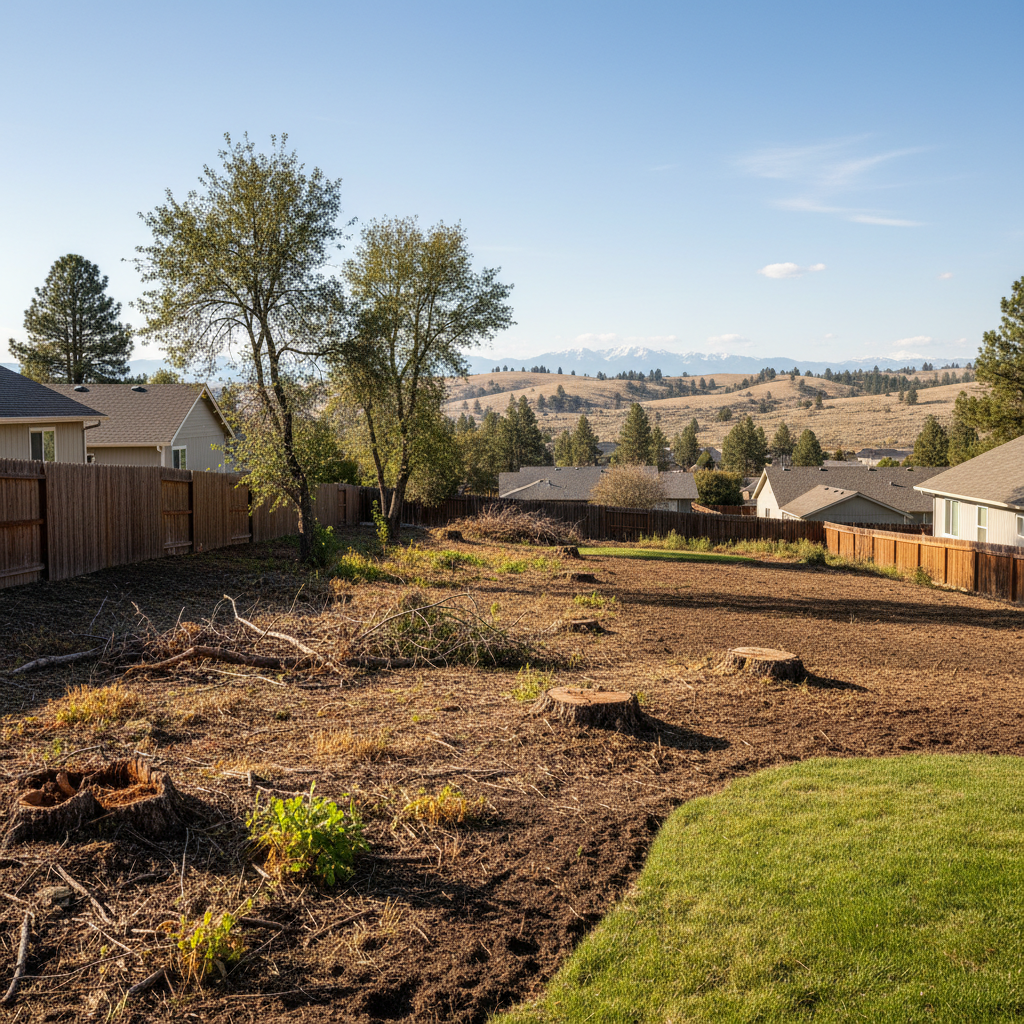
So, you've got some land in Yakima that needs clearing, huh? Maybe you just bought a new parcel out near Terrace Heights, or you're finally tackling that overgrown back forty you've been eyeing for ages. Whatever the reason, you're looking at two main ways to get the job done: forestry mulching or good old-fashioned excavation. Both will clear your land, but they go about it completely differently, and what works best for your neighbor might not be right for you.
What's the Deal with Forestry Mulching?
Forestry mulching uses a specialized machine, often a skid steer or an excavator fitted with a big mulching head on the front. This thing grinds up trees, brush, and stumps right where they stand. It chews everything up into a fine layer of wood chips and organic material that gets spread across the ground. Think of it like a giant, industrial-strength wood chipper that moves across your land.
Pros of Mulching:
- Speed: These machines are fast. They can clear a lot of acreage in a short amount of time, especially if you're dealing with dense brush and smaller trees.
- Soil Health: That layer of mulch? It's really good for your soil. It helps prevent erosion, holds onto moisture, and eventually breaks down to enrich the ground. This is a big plus in areas with our dry Yakima summers, wouldn't you agree?
- No Hauling: Since everything gets mulched right there on site, you don't need to haul away debris. That means fewer trucks on your property, less fuel burned, and often a lower overall cost because you're not paying for disposal fees.
- Minimal Ground Disturbance: The machines are designed to be pretty gentle on the land. They don't typically dig deep ruts or compact the soil as much as heavy excavators can, which is great if you're trying to preserve the existing grade or the root systems of trees you want to keep.
- Appearance: You're left with a clean, mulched surface that looks pretty tidy right away.
Cons of Mulching:
- Stumps Remain: While the mulcher grinds down stumps to ground level or just below, the root ball is still there. If you're planning to build or plant something exactly where a stump was, you might still need to deal with it.
- Limited Tree Size: There's a limit to what a mulcher can handle. Really big, mature trees might need to be felled first; then, the mulcher can process the remaining brush and smaller trunks.
- Cost: While often cheaper than excavation when you factor in hauling, the equipment itself is specialized, so the hourly rate can seem high.
Traditional Excavation: The Old School Way
This is what most people picture when they think about land clearing. You've got excavators, bulldozers, maybe a grapple truck. These machines physically pull out trees, stumps, and brush, often digging up the root balls completely. The debris then gets piled up, burned (if permits allow and conditions are safe), or hauled away.
Pros of Excavation:
- Complete Removal: When an excavator pulls out a tree, that stump and its root system are GONE. This is crucial if you're planning to build a foundation, lay concrete, or plant new trees in specific spots.
- Handles Anything: No tree is too big for an excavator and a good crew. They can tackle massive Ponderosa pines or old cottonwoods without breaking a sweat.
- Site Preparation: Excavation lets you grade, level, and shape the land exactly how you want it. If you need to cut in a driveway, dig a trench, or prepare a perfectly flat building pad, this is your method.
Cons of Excavation:
- Ground Disturbance: It's messy. Excavators can leave big ruts, compact the soil significantly, and generally make a bigger impact on the land. You'll often need to bring in topsoil or do a lot of remediation afterward.
- Hauling & Disposal: All that debris has to go somewhere. This means more trucks, more fuel, and often significant costs for hauling and landfill fees, especially if you can't burn on site.
- Erosion Risk: With all the vegetation and topsoil removed, your land can become vulnerable to erosion, especially during our spring rains or if you're on a slope.
- Time & Cost: Generally, traditional excavation can take longer and be more expensive than mulching, particularly on larger, brushy lots, once you factor in all the hauling and site restoration.
Which One Should You Pick for Your Yakima Property?
Alright, so what's the verdict for folks here in the valley?
If your goal is to clear out dense brush, smaller trees, and overgrown areas to create pasture, fire breaks, or just open up your property without a specific building plan, then forestry mulching is often the smarter, more economical choice. It's less disruptive, leaves you with healthy soil, and you don't have to worry about hauling away mountains of debris. We've done a lot of mulching jobs around the Selah Gap and down towards Union Gap where people just want to reclaim their land from sagebrush and junipers, and it works great.
However, if you're planning on building a new home, putting in a large shop, or need to completely remove every trace of a tree and its roots for a specific construction project, then traditional excavation is usually necessary. You need that clean slate, and you need to be able to grade the land precisely. There's no getting around pulling those stumps out if you're pouring a foundation right over them. It's more invasive, but sometimes you just need that level of thoroughness.
At Yakima Tree Service, we handle both kinds of jobs, and we're happy to walk your property with you to figure out the best approach. Every piece of land is different, and what you plan to do with it after it's cleared makes all the difference in picking the right method.